






How To Eat


Max out your odds against chronic illness and premature death, and make it easy to control your weight. Become a nutritarian: a person who seeks out nutrient-dense foods, while avoiding unhealthful foods. The objective is to eat less macronutrients (less protein, less carbohydrate, and less fat), but more micronutrients (naturally ocurring vitamins, minerals, and phytochemicals). This has remarkable benefits for your health, especially when combined with regular exercise. Even if you are young, healthy, and not overweight, the choices you make today will have a profound effect on your future health, and on how much enjoyment you derive from your lifetime. Anyone can do it, it's just a matter of learning the right things and making the necessary effort to change your habits. And it's really important.

Nutritarian food selection is not governed by any philosophical or political views. It is also not concerned with anthropological research on what foods primitive people may have managed to find and survive on. It is entirely based on an enormous amount of research in nutrition science and careful observation of medical outcomes conducted during the last few decades, far beyond the outdated notions still amazingly prevalent and constantly put forward in popular media. But it is most definitely not spartan or some kind of joyless, functional eating. Nutritarian cooking has its own set of techniques and styles, and when properly used they produce gourmet delights that rival any others.

Nutritarian food selection is built around green vegetables. If you stop eating all foods with added salt or sugar, then within a couple of months your tastes will return to their uncorrupted state, and (perhaps for the first time) you will be able to fully appreciate the rich, complex flavors of vegetables, fruits, and other whole, natural plant foods. The nutritarian food universe consists of the following groups of foods:         

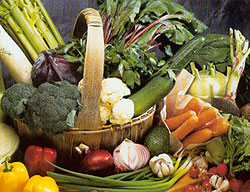
     Cruciferous vegetables such as bok choy, broccoli, broccoli rabe, broccolini, Brussels sprouts, cabbage, cauliflower, collard greens, arugula (rocket), kale, kohlrabi, mustard greens, radishes, daikon, cabbage, turnip greens, and watercress. These foods, especially the leafy greens, are extremely nutrient-dense and provide powerful support for the body's defenses against cancer.
     Other vegetables such as lettuce, spinach, chard, escarole, endive, beet greens, tomatoes, onions, carrots, bell peppers, asparagus, green beans, zucchini, summer squash, celery, eggplant, fennel and cucumbers. These foods, especially the leafy greens, are extremely nutrient-dense and provide a synergistic mix of micronutrients essential to long-term good health.
     Fresh fruits such as strawberries, cranberries, pomegranate, plums, raspberries, blueberries, blackberries, grapefruit, oranges, kiwi, watermelon, cantaloupe and other melons, apples, peaches and nectarines, cherries, apricots, pineapple, lemons, limes, mango, papaya, persimmons, pears, grapes and bananas. Fruits, especially berries, are nutrient-dense and provide critical support for the body's defenses against cancer. And they taste wonderfully delicious.
     Beans and other legumes such as kidney beans, black beans, anasazi beans, navy beans, pinto beans, great northern beans, fava beans (broadbeans), adzuki beans, Scarlet runner beans, mung beans, green lentils, red lentils, black lentils, soybeans, edamame, chickpeas and split peas. Legumes contain important nutrients, including ample amounts of protein and health-promoting resistant starch. Green peas are an excellent food on the borderline between legumes and healthy starches. Tofu is also an acceptable legume choice, although as a processed food it is somewhat less desirable than unprocessed soybeans such as edamame.
     Healthy fats such as avocados, unsalted olives (hard to find), raw unsalted seeds such as sunflower seeds, pumpkin seeds (pepitas), unhulled sesame seeds, hempseed, and ground flaxseed, raw unsalted nuts such as walnuts, Brazil nuts, cashews, almonds, macadamias, hazelnuts (filberts), pistachios, pine nuts (pignolias), and pecans. Because of their high caloric density, quantities of healthy fats must be limited unless weight gain is desired. But healthy fats are extremely important nutritionally, and a minimum of one ounce of seeds or nuts daily is essential.
     The GOMBBS foods are the foods that current science is finding out have especially powerful cancer-preventive effects, and state-of-the-art nutritarian food selection should include these foods as daily or near-daily components. The GOMBBS foods are:         
     Greens: Raw leafy greens. 'Nuff said.
     Onions: The allium family includes onions, garlic, shallots, leeks, and scallions. Any of these should be chopped and allowed to stand for a few minutes before eating or cooking. This breaks down the cell walls and releases enzymes that increase the amount of cancer-preventive nutritents available.
     Mushrooms: These provide unique micronutrients that are valuable in the body's anti-cancer defenses. Since raw mushrooms may have some toxicity, they should be cooked (they are delicious in steamed vegetables or soups), which also enables the body to absorb some of their nutrients more effectively.
     Beans: Their many benefits include cancer-preventive compounds.
     Berries: Fruits in general contain a variety of cancer-preventive nutrients, and among them the berries have the highest concentrations (especially relative to their calorie content).
     Seeds: Among the healthy fats, seeds have the highest nutrient-to-calorie ratio.
     Healthy starches such as winter squashes, sweet potatoes and corn. These are very good foods, and most nutritarians have at least one serving a day. (Several kinds of cooked winter sqashes can be eaten with the peels, indeed they are delicious this way. These include the peels of kabocha, kuri, acorn, and butternut squash, provided that they are organically grown. It's probably a good idea to eat all of your squash organic anyway, if you can afford it.) The starchy root vegetables such as such as beets, turnips, parsnips, kohlrabi and rutabaga are also good foods. They can be eaten rather freely (and are delicious) raw, or in reasonable quantities cooked.
     Intact whole grains include the standout choices wild rice and other pseudograins such as amaranth, quinoa, and buckwheat. Steel-cut oats are another top choice, and millet and teff are good grains and safe for those who have gluten issues. Brown rice is less nutrient-dense, but far preferable to white rice, which is a highly processed food that should be avoided. For those without gluten issues, whole barley, spelt, kamut, triticale, and whole wheat are reasonable choices. Grains are less nutrient-dense than the healthy starches, which are generally a better choice. When grains are used, they should be in whole form and intact (not processed as flour).
     Plant milks such as soy milk, hempseed milk, and almond milk are discussed on this page. They are normally used in recipes, not as beverages. The best beverage by far is water.
     Animal foods, properly selected and limited to no more than 10% of caloric intake, are a nutritarian option for many people. Beyond this amount, there is strong scientific evidence that they contribute to numerous chronic diseases. Since they contain animal protein, they should be completely avoided by persons with autoimmune conditions.
     Flavor enhancers in recipes: dried fruits such as dates, apricots, figs, raisins and currants, cocoa powder, vanilla, wolfberries (goji berries), salt-free mustard, horseradish, mushrooms, vinegars (especially balsamic and other kinds of sweet, flavored vinegar), nutritional yeast, soy milk, hempseed milk, fresh herbs, vegetable juices, and spices. Flavor enhancers are best used in modest amounts to bring out or complement the rich, complex flavors of natural foods.

The first six of these--- the vegetables, fresh fruits, legumes, healthy fats and the GOMBBS foods--- are essential. Healthy starches, grains, plant milks, and animal foods are optional foods that can be eaten in limited quantities, unless calorie limitations or health conditions may rule some of them out. The flavor enhancers are generally healthful or at least neutral dietary components.

Good nutrition requires a variety of foods. Over the course of a month, at least several different foods from each of the first six food groups should be eaten, to provide a wider range of micronutrients and add interest to one's daily fare. In addition, both raw and cooked vegetables are needed. Raw foods have maximal nutrition, but cooking a portion of one's foods makes some nutrients more accessible, and allows a greater quantity and variety of nutrient-dense vegetables and legumes to be eaten. Daily intake normally includes a minimum of:         
     One pound of raw vegetables.
     One pound of cooked vegetables.
     One pound of fresh fruits.
     One cup of beans or other legumes.
     One ounce of seeds or nuts.
To those eating standard diets, these may seem like a lot of food. But the total calories in this list is only about 900, well under one's daily needs, and nutritarians generally eat more than these amounts, plus some of the healthy starches and other optional foods. Of course if you are used to a low-fiber diet, jumping in even at the minimum levels might cause you digestive difficulties, but over time, jaws strengthen, digestion adapts, and health-promoting intestinal flora optimize to enable one to assimilate such foods without indigestion or excess gas production. Indeed, indigestion is a rarity for nutritarians (and as you might guess, constipation is almost unheard of). This kind of diet is by far the healthiest for one's digestive system.

A bit of a fine point, but an important one, is that some source of healthy fat should accompany vegetable dishes, at least in the same meal. The presence of fat significantly facilitates the absorption of nutrients from vegetables. Not much is needed--- a few almonds or cashews in a green smoothie or a tablespoon of sunflower or pumpkin seeds sprinkled on cooked vegetables or a salad are sufficient, a nut or avocado-based dressing on a salad is ample.

The following are not part of the nutritarian food universe, and should be consumed only on rare occasions, or avoided entirely (especially transfats, processed meats, and mercury-heavy varieties of fish):                  
     Processed foods. Don't be fooled by boxes splashed with "natural", "organic", "whole-grain", "fat-free", "omega-3", or whatever buzzwords have reached the popular media. It's still junk.
     Foods containing transfats. No leeway here--- any amount will damage your arteries.
     Refined carbohydrates. A little once in a while won't hurt you, but these are bad foods.
     Foods with added salt or sugar. These are just cheap ways to impart flavor to low-quality foods. Unhealthy for your body and detrimental to your appreciation of real food.
     Isolated plant oils. Another cheap, unhealthy version of real food. Don't buy the propaganda about olive oil--- its relentlessly touted micronutrients are available in many nutritarian foods, without spending a ton of calories.
     Whole milk, 2% milk, and dairy fragments such as cheese, butter, ice cream, and sour cream. They can be tasty, but they are very bad food choices. Experiment with nutritional yeast as a cheesy flavor enhancer.
     Red meats, any kind of processed meats. Don't ever eat processed meats.
     Predator fish such as shark, swordfish, and tilefish, which have a lot of mercury. If you really want to eat fish, select a healthy kind.
     Beverages containing caffeine or alcohol. These are just bad habits. A little once in a while probably won't hurt you, but stop after one. Caffeine disrupts your appetite mechanisms, and only makes you think you are smarter (and if you are sleepy, you need a nap). Alcohol (ethanol) is a cancer promoter that raises triglycerides. Don't buy into the hype about its health benefits. Ethanol acts as a vasodilating drug (with some serious side effects) that modestly benefits some people who have developed cardiovascular disease from eating bad diets. But cardiovascular disease is one of the easiest chronic diseases to prevent and even reverse with a nutritarian lifestyle. It's just foolish to increase your chances of cancer in return for a modest benefit, when instead you could just eliminate cardiovascular disease from your life by eating a different kind of tasty food.

Good food preparation and cooking techniques include:         
     Blending salad dressings and vegetable sauces using seeds, nuts, or avocados as the fat component. You haven't eaten salad until you've had one with a fruit-based dressing blended with pecans and some sweet vinegar. If you don't have a blender that's up to this task, there are still many nutritarian salad dressings you can make. One approach is to use nut butters, which are just already-pulverized nuts you buy in a jar. Almond and cashew butter are the most commonly seen. Also, tahini is just ground sesame seeds. Eat only nut and seed butters made from raw ingredient, and without oil or other additives.
     Steaming vegetables. Include a cruciferous green, and some onions and mushrooms. You can toss in almost any food to add nutrition and interest--- diced sweet potato or winter squash, frozen corn kernels, peas, diced apple, chopped dried fruit (marinate in balsamic vinegar ahead of time, for easy cutting and a flavor blast), raisins, raw or blanched peanuts, the possibilities are endless. Besides fruit, try thin-sliced beets, parnsips, or carrots to sweeten it up. Steamed veggies are great with cooked beans.
     Vegetable-based soups and stews. Again, you can add almost any nutritarian food, especially beans or lentils, and some root veggies and a handful of raisins can work wonders.
     Blending fruit smoothies. Include some seeds or nuts, and some raw spinach--- it adds a great nutritional punch and won't hurt the taste.
     Blending greens with fruit or other flavor enhancers. Endless possibilities.
     Microwaving at medium power levels.

Heating foods above the boiling point of water destroys many nutrients and can create toxic compounds. Cooking methods to avoid include:         
     Frying or any other method involving heated oils. These are extremely unhealthy and should should never be used.
     Grilling and broiling. Browned food should be avoided or eaten only rarely--- use the healthy flavor enhancers to add flavor, not browning.

Baking and roasting can be used occasionally, but are not primary nutritarian cooking methods. They should only be used for foods with high water content, such as squash, zucchini, tomatoes, eggplant, sweet potatoes, apples, and so on.

Adults should avoid snacking. Please read the page on snacking and true hunger, as it is critically important to understand appetite regulation and the distinction between toxic and true hunger. By the way, frequent eating leads to weight gain, not weight loss.

Vitamins and other supplements should be used very minimally, but there are some key supplements that one needs to be aware of.

When you start eating in the nutritarian style, you may not feel better initially. It takes a while, weeks or months, for the nutrient level in the body's tissues to build up, and for the body to optimize its biochemical processes in the new environment. In addition, some people go through a "detoxification" process, once the body is not constantly digesting unhealthy foods (see the page on snacking and true hunger). But stick with it. In time, you will become significantly healthier and feel a lot better. If you want to really feel and perform your best, and earn your best chance of a long, healthy life, combine nutritarian food selection with a healthy lifestyle:         
     Exercise regularly, including core strengthening and cardiovascular conditioning, and don't just sit around. Use it or lose it.
     Get adequate rest, whatever is right for you. If you were awakened by an alarm clock this morning, then you didn't get enough sleep.
     Maintain a healthy weight: a BMI between 18.5 and 22 and a small waist size, but not by dieting, which is a very unhealthy and ultimately ineffective practice. The nutritarian lifestyle is the only approach to weight control that is health-promoting, permanent, and enjoyable.
     Avoid risky behaviors. Don't do anything that isn't smart.
     Do not use tobacco, caffeine, alcohol, or other drugs--- they are all net minuses. Anything that makes you feel different is toxic.
     Minimize exposure to environmental chemicals, pesticides, strong cleaning compounds, and the like. It's not necessary to spray some aerosol to make things smell better or to make your hair look just right, or to slap on sunscreen every time you are going to be in the sun for a few minutes (wear a broad-brimmed hat). It is especially important to avoid exposing children to toxic agents, as their cells are dividing more rapidly and consequently are more susceptible to DNA damage.
     Consider using some organic foods, particularly the dirty dozen most contaminated fruits and vegetables. Again, this is especially important for children. On the other hand, it is far better to eat conventional produce than to eat an insufficient amount of produce, so don't be afraid to eat conventional if limited financial resoures or availability restrict your choices.
     Get some sun--- we didn't evolve in caves. But not too much, and wear a broad-brimmed hat--- we had an intact ozone layer back then.
     Don't wear shoes except when you really need them (shoes are tools), and check out minimalist footwear options. Shoes make you walk wrong.
     Pursue interesting, enjoyable work and play, but maintain a low-stress approach. Less is more.
     Develop good family and social relationships. Love your fellow creatures, human and animal.
     Choose the moral, ethical path in life. It's always best in the long run.
     Don't fret over things that are not truly important, or that you cannot change. Laugh, love life, and enjoy each day to the fullest. Tomorrow isn't promised to anyone, not even nutritarians.

Some of the most important hard science behind the nutritarian concepts can be found in The China Study by Dr. T. Colin Campbell. There are also thousands of studies that point to this coherent picture. But the most convincing proof of all may be the many people who have restored their health by reversing cardiovascular disease, Type II diabetes, autoimmune disease, obesity, and other diseases and conditions, and the many people who have used this approach to maintain healthy vigor and enjoy life as they age, while their acquaintances spend their days in hospitals and doctors' offices.

If you are wondering why you haven't heard more about all this, well, surprise, the reasons involve money. Read Overdo$ed America by Dr. John Abramson.

For detailed information on how to change to a nutritarian eating style, including recipes, and the medical and scientific rationale for this approach to nutrition, read Eat To Live or Eat For Health by Dr. Joel Fuhrman. His website also has some useful free information, and many more resources available to paying members.

If you have tried every which way and just cannot manage a nutritarian approach, for one reason or another, your next best choice is probably the starch-based diet of Dr. John McDougall. He is a great man, and his starch-based diet is a lot healthier than standard fare, but he's got the science wrong on some key points. Be sure to get enough healthy fats, go as heavy as you can on the vegetables, as light as you can on salt, and use blood testing and supplements, if needed, to normalize your vitamin D level, no matter what you hear.